Call us: +91 8883310222, +91 8973998399
Coimbatore
🇺🇸 English

We’re here to answer any question you may have.
+91 8883310222, +91 8973998399
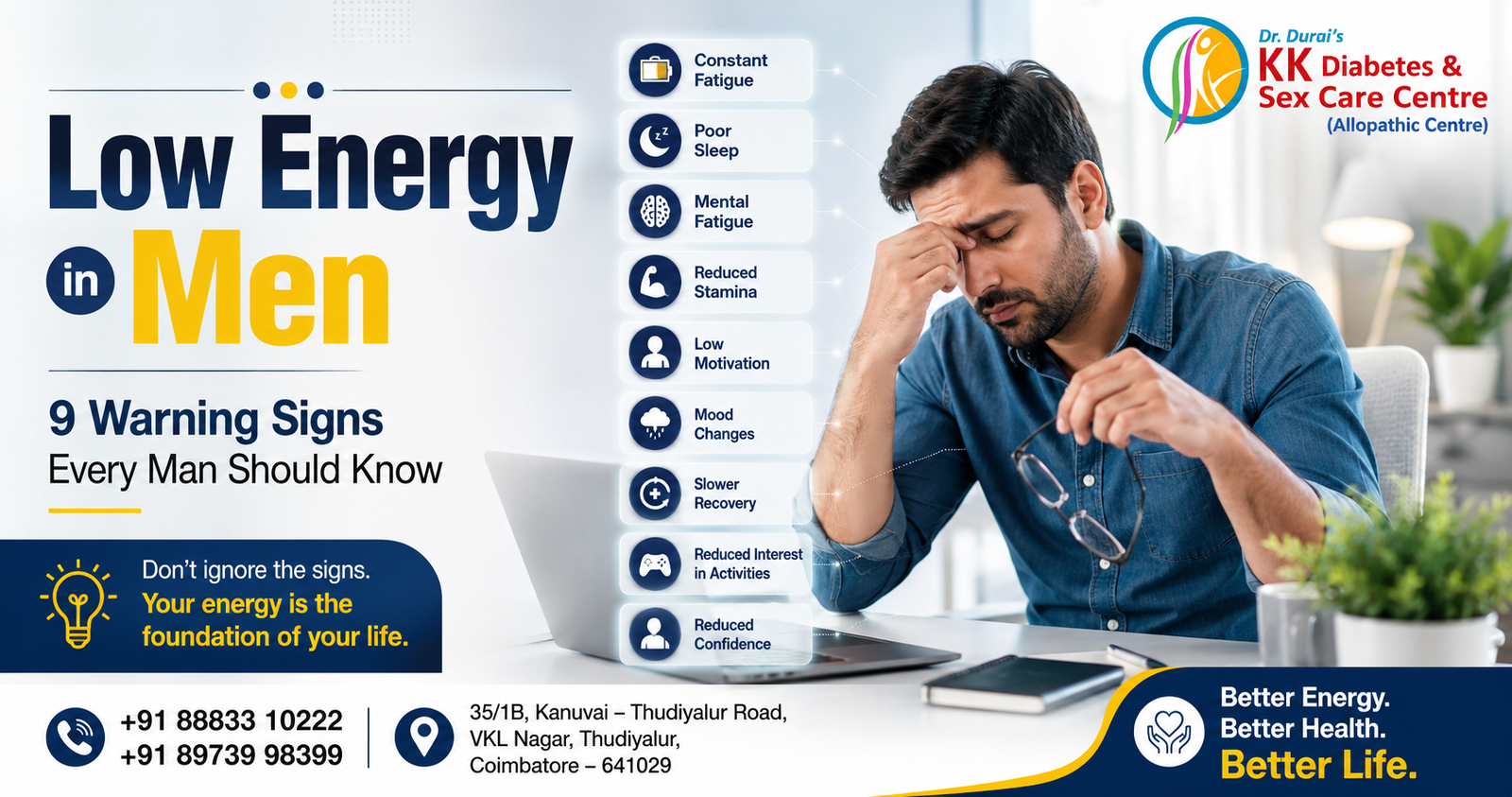
Feeling tired after a busy day is normal, but when fatigue becomes a daily struggle, it may indicate something more significant. Low Energy in Men is often overlooked because many assume it is simply part of aging, work pressure, or a hectic lifestyle. However, persistent low energy can affect physical health, emotional well-being, confidence, productivity, and overall quality of life.
Recognizing the warning signs early allows individuals to make positive lifestyle changes and seek professional guidance when necessary. In this article, we’ll discuss the most common signs of Low Energy in Men, possible contributing factors, practical ways to improve energy levels, and when it is time to consult a healthcare professional.
Low Energy in Men refers to persistent feelings of tiredness, reduced stamina, lack of motivation, or physical exhaustion that interfere with daily activities. While occasional fatigue is expected after physical or mental exertion, ongoing low energy may signal lifestyle issues or underlying health concerns.
Energy levels are influenced by several factors, including sleep quality, nutrition, physical activity, stress, emotional health, and overall medical wellness. Understanding these influences is the first step toward improving long-term health.
Healthy energy levels support almost every aspect of life, including:
When energy levels remain consistently low, everyday tasks can become more challenging, affecting both personal and professional life.
One of the earliest warning signs of Low Energy in Men is feeling tired even after a full night’s sleep. Persistent fatigue may reduce productivity, concentration, and motivation, making routine activities feel exhausting.
If fatigue continues for several weeks despite adequate rest, it should not be ignored.
Simple activities such as climbing stairs, exercising, or walking longer distances may become more difficult than usual. Reduced stamina often develops gradually and can interfere with an active lifestyle.
Maintaining regular physical activity is important, but persistent changes deserve attention.
Low energy frequently affects mental performance. Men experiencing persistent fatigue may notice:
Mental clarity is closely connected to overall physical health.
Ironically, people with Low Energy in Men often struggle with sleep.
Common sleep-related concerns include:
Healthy sleep habits play a major role in maintaining consistent energy levels.
Persistent tiredness often leads to decreased motivation.
Activities that were once enjoyable may begin to feel overwhelming, including:
Reduced motivation may also affect emotional well-being and self-confidence.
Low energy may influence emotional health.
Some men experience:
Emotional wellness and physical health are closely connected.
When energy remains low for extended periods, many individuals gradually withdraw from hobbies, social events, and recreational activities.
This reduction in participation may affect both mental well-being and relationships.
If you find that recovery after exercise or physical work takes much longer than before, it may indicate reduced overall energy reserves.
Proper nutrition, hydration, sleep, and regular physical activity are essential for recovery.
Persistent fatigue can influence confidence and self-esteem.
When physical and emotional energy decline, individuals may feel less motivated to participate in social, professional, or personal activities.
Improving overall wellness often contributes to greater confidence.
Several factors may contribute to Low Energy in Men, including:
Inadequate or poor-quality sleep affects physical and mental performance.
Long-term stress increases mental fatigue and emotional exhaustion.
Skipping meals or eating nutrient-poor foods may reduce energy production.
A sedentary lifestyle often contributes to reduced stamina.
Even mild dehydration can decrease concentration and energy.
Sometimes persistent fatigue may be associated with underlying health conditions that require professional evaluation.
Small daily improvements can have a positive impact on overall wellness.
Aim for a consistent sleep schedule and create a relaxing bedtime routine.
Regular exercise supports better circulation, stamina, and overall health.
Include fruits, vegetables, whole grains, lean proteins, and healthy fats.
Drink enough water throughout the day to support normal body functions.
Practice relaxation techniques, mindfulness, or enjoyable hobbies to reduce stress.
Routine health evaluations help identify concerns before they become more significant.
Consider consulting a healthcare professional if:
Early evaluation may help identify contributing factors and guide appropriate care.
According to the World Health Organization (WHO), sexual health is an important part of overall wellness and should be supported through proper awareness, consultation, and medical care.
Low Energy in Men is more than simply feeling tired after a busy day. Persistent fatigue may affect physical health, emotional well-being, confidence, relationships, and overall quality of life. Recognizing the warning signs early provides an opportunity to make healthier lifestyle choices and seek professional advice when needed.
Taking care of your sleep, nutrition, physical activity, stress management, and overall health can significantly improve long-term energy levels. If symptoms persist, consulting a qualified healthcare professional is the best way to understand the underlying cause and receive personalized guidance.
While energy levels may gradually change with age, persistent fatigue should not be assumed to be normal and deserves evaluation.
Yes. Chronic stress may contribute to physical fatigue, reduced motivation, and emotional exhaustion.
Absolutely. Quality sleep is one of the most important factors supporting consistent energy and overall health.
Regular physical activity often helps improve stamina, circulation, and long-term wellness.
If low energy continues despite healthy lifestyle habits or interferes with daily life, professional guidance is recommended.
This article is intended for educational and awareness purposes only and should not be considered medical advice, diagnosis, or treatment. Always consult a qualified healthcare professional for personalized medical guidance.
KK Diabetes & Sex Care Centre
35/1B, Kanuvai to Thudiyalur Road, VKL Nagar, Thudiyalur, Tamil Nadu – 641029
+91 88833 10222 | +91 89739 98399
Book your confidential appointment today and protect your long-term health.
Adding {{itemName}} to cart
Added {{itemName}} to cart