Call us: +91 8883310222, +91 8973998399
Coimbatore
🇺🇸 English

We’re here to answer any question you may have.
+91 8883310222, +91 8973998399
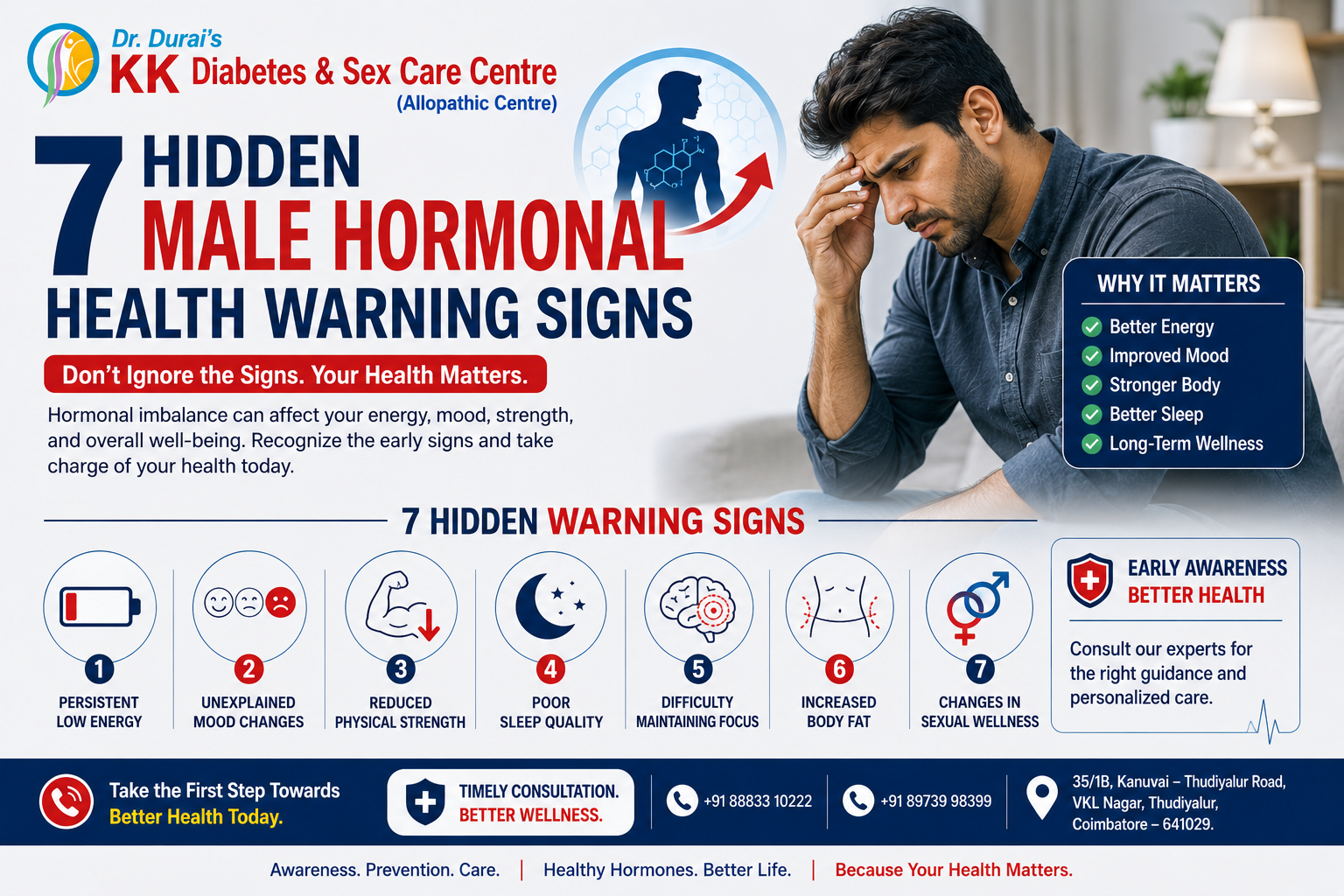
Male Hormonal Health plays a vital role in a man’s overall well-being, influencing energy levels, mood, physical performance, emotional balance, and long-term health. Hormones act as chemical messengers that regulate many essential functions in the body. When hormone levels become imbalanced, the body may begin showing subtle warning signs that are often ignored or mistaken for everyday stress or aging.
Many men experience hormonal changes without realizing the underlying cause of their symptoms. Understanding these early warning signs can help individuals seek professional guidance and make informed health decisions before more significant concerns develop.
In this article, we explore seven hidden warning signs of Male Hormonal Health imbalance and why early attention matters for long-term wellness.
Male Hormonal Health refers to the proper balance and function of hormones that influence physical, emotional, and metabolic processes in the body. Hormones help regulate:
When hormone levels fluctuate or become imbalanced, men may experience symptoms that affect their daily lives and overall quality of life.
Hormonal balance affects nearly every aspect of health. Healthy hormone levels contribute to:
Ignoring hormonal changes may allow symptoms to worsen over time and affect overall well-being.
One of the most common signs of hormonal imbalance is ongoing fatigue or reduced energy.
Many men assume constant tiredness is caused by work pressure, stress, or lack of sleep. However, persistent fatigue that continues despite adequate rest may indicate underlying hormonal changes.
Low energy can impact both personal and professional life if left unaddressed.
Hormones influence emotional well-being and mental health.
When hormonal balance changes, men may experience:
Understanding the connection between hormones and emotional health can help identify potential concerns early.
A decline in muscle strength or physical performance may sometimes be associated with hormonal imbalance.
Physical changes that occur without significant lifestyle changes should be evaluated professionally.
Sleep and hormonal health are closely connected.
Hormonal changes may contribute to:
Sleep disturbances can further affect hormone regulation, creating a cycle that impacts overall health.
Hormonal imbalance may affect concentration, productivity, and cognitive function.
Mental clarity plays an important role in workplace performance and everyday decision-making.
Changes in body composition may sometimes indicate hormonal imbalance.
Men may notice:
Hormones play a significant role in regulating metabolism and body composition.
Hormonal health is closely linked to reproductive and sexual wellness.
Some men may experience:
These changes should not be ignored, as they may indicate underlying hormonal concerns.
Several factors may contribute to hormonal changes.
Understanding the cause is important for developing an effective health management plan.
Stress is one of the most common contributors to hormonal imbalance.
Long-term stress may affect:
Managing stress through healthy lifestyle practices can support hormonal balance and improve quality of life.
Healthy daily habits can help support Male Hormonal Health.
Exercise supports metabolism, energy production, and overall wellness.
Aim for consistent and restorative sleep.
A nutritious diet helps support healthy hormone function.
Relaxation techniques and healthy coping strategies can improve emotional wellness.
Routine medical evaluations help identify concerns early.
Many men dismiss symptoms because they develop gradually.
You should consider professional evaluation if you experience:
Early attention may help prevent future complications and improve long-term health outcomes.
Early awareness and professional guidance can provide several advantages.
Addressing hormonal concerns may support better daily performance and vitality.
Balanced hormones can contribute to improved mood and stress management.
Healthy hormone levels support muscle strength and overall fitness.
Early intervention may help reduce future health risks and support overall wellness.
Hormonal balance affects much more than energy and physical performance. It influences:
Maintaining healthy hormones is an important part of overall healthcare and preventive wellness.
According to the World Health Organization (WHO), sexual health is an important part of overall wellness and should be supported through proper awareness, consultation, and medical care.
Understanding the hidden warning signs of Male Hormonal Health imbalance can help men take proactive steps toward better wellness. Persistent fatigue, mood changes, poor sleep, reduced physical strength, difficulty focusing, increased body fat, and reproductive wellness concerns should never be ignored.
Early awareness, healthy lifestyle habits, and professional medical guidance can support long-term well-being and help men maintain better physical, emotional, and overall health.
Male Hormonal Health refers to the balance and function of hormones that regulate physical, emotional, and metabolic processes in the body.
Yes. Long-term stress may influence hormone production and overall wellness.
Not always. Fatigue may have several causes, but persistent tiredness should be medically evaluated.
Sleep helps regulate hormone production and supports overall wellness.
If symptoms persist or affect daily life, professional medical consultation is recommended.
This blog is intended for educational and awareness purposes only and should not replace professional medical advice, diagnosis, or treatment. Please consult a qualified healthcare professional for proper medical evaluation and guidance.
KK Diabetes & Sex Care Centre
35/1B, Kanuvai to Thudiyalur Road, VKL Nagar, Thudiyalur, Tamil Nadu – 641029
+91 88833 10222 | +91 89739 98399
Book your confidential appointment today and protect your long-term health.
Adding {{itemName}} to cart
Added {{itemName}} to cart