Call us: +91 8883310222, +91 8973998399
Coimbatore
🇺🇸 English

We’re here to answer any question you may have.
+91 8883310222, +91 8973998399
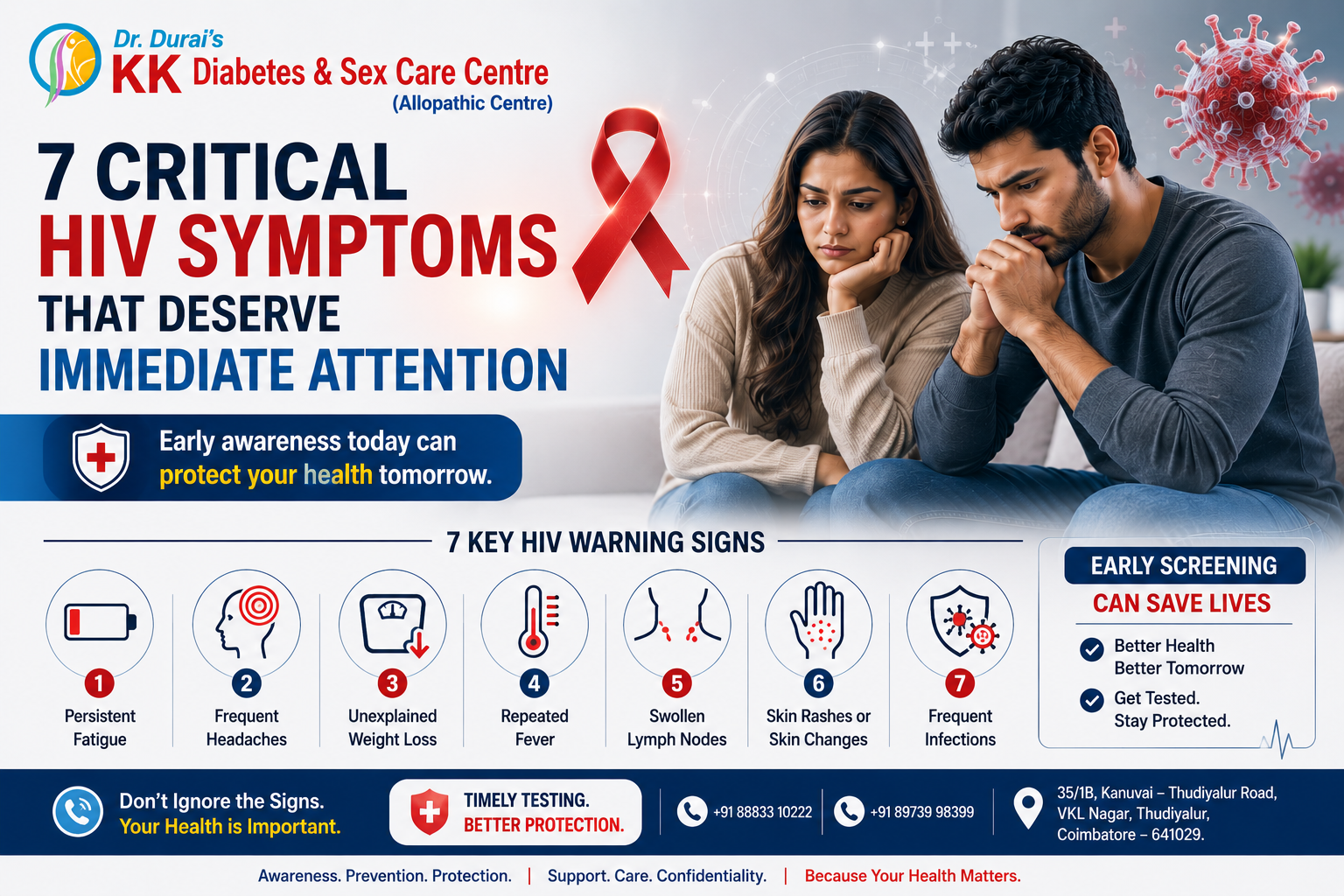
Understanding the 7 Critical HIV Symptoms That Deserve Immediate Attention can help individuals recognize possible health concerns early and make informed decisions about screening and medical care. HIV affects the immune system and may cause symptoms that are often mistaken for common illnesses. Because some warning signs can appear gradually or remain unnoticed, awareness plays an important role in protecting long-term health.
Many people delay seeking medical advice because symptoms seem minor or temporary. However, early recognition and timely screening can help improve health outcomes, support immune function, and reduce the risk of future complications.
Human Immunodeficiency Virus (HIV) is a condition that affects the body’s immune system. Over time, it can reduce the body’s ability to fight infections and illnesses. Early diagnosis and proper medical management can help individuals maintain a healthy and active lifestyle.
According to the World Health Organization, early detection and access to healthcare services are important components of HIV management and awareness.
Recognizing the 7 Critical HIV Symptoms That Deserve Immediate Attention is important because symptoms may sometimes appear mild or resemble other common health conditions.
Benefits of early awareness include:
Early screening remains one of the most effective ways to understand your health status.
One of the most common symptoms associated with HIV is ongoing fatigue.
Occasional tiredness is normal, but persistent fatigue that continues despite adequate rest may indicate that the immune system is under stress.
When fatigue affects daily activities for an extended period, professional medical evaluation is recommended.
Recurring headaches without a clear cause can sometimes be linked to underlying health concerns.
While headaches are common, frequent or severe episodes that continue over time should not be ignored.
Understanding the cause is important for proper health assessment.
Unexpected weight loss without significant dietary or lifestyle changes may be a sign that requires medical attention.
Many people overlook gradual weight loss until it becomes noticeable.
Early medical consultation can help identify the underlying cause.
Frequent fever episodes can be one of the important warning signs associated with immune system changes.
Repeated fevers may indicate that the body is working harder to respond to infections or health concerns.
Persistent fever should always be evaluated by a healthcare professional.
Lymph nodes are part of the body’s immune defense system.
Swelling in areas such as the neck, underarms, or groin may occur when the body is responding to infection or inflammation.
If swelling persists for an extended period, medical assessment is advisable.
Skin health can sometimes provide clues about overall wellness.
Certain skin conditions may appear as:
Skin changes that do not improve over time should be evaluated professionally.
Frequent infections may indicate that the immune system requires attention.
People experiencing repeated infections may notice:
This symptom should not be overlooked, particularly when combined with other warning signs.
One of the challenges associated with HIV awareness is that some individuals may not experience noticeable symptoms during the early stages.
This means a person may feel healthy while still being unaware of their health status.
Because symptoms may vary from person to person, screening remains important even when no obvious symptoms are present.
Understanding risk factors helps improve awareness and prevention.
Knowledge and awareness play an important role in prevention.
Early screening offers several advantages:
Understanding health status early allows for timely medical guidance.
Early intervention may help support better health outcomes.
Screening can provide clarity and reduce uncertainty.
Knowing your health status encourages informed healthcare decisions.
You should consider professional medical consultation if you experience:
A healthcare professional can provide proper evaluation and guidance based on your individual health condition.
Healthy habits can support overall wellness and immune function.
These practices contribute to better long-term health.
Health concerns can affect emotional wellness as well as physical health.
Many individuals experience:
Accurate information and professional guidance can help reduce uncertainty and promote informed decision-making.
Not everyone notices symptoms during the early stages.
A person may not experience symptoms despite having HIV.
HIV can affect anyone regardless of age, background, or lifestyle.
Education helps reduce misconceptions and encourages responsible healthcare decisions.
According to the World Health Organization (WHO), sexual health is an important part of overall wellness and should be supported through proper awareness, consultation, and medical care.
Understanding the 7 Critical HIV Symptoms That Deserve Immediate Attention can help individuals recognize possible warning signs and take proactive steps toward protecting their health. Persistent fatigue, headaches, weight loss, fever episodes, swollen lymph nodes, skin changes, and frequent infections should never be ignored.
Early awareness, timely screening, and professional medical guidance are essential for maintaining long-term wellness and supporting overall health. Taking action early can make a significant difference in health outcomes and quality of life.
Some people may experience symptoms early, while others may not notice symptoms for a long time.
Persistent fatigue can sometimes be associated with immune system stress and should be medically evaluated.
Early screening helps individuals receive timely medical guidance and better long-term health support.
Yes. Many symptoms may resemble common infections or general health issues.
Professional consultation is important if symptoms persist or affect daily life regularly.
This blog is intended for educational and awareness purposes only and should not replace professional medical advice, diagnosis, or treatment. Please consult a qualified healthcare professional for proper medical evaluation and guidance.
KK Diabetes & Sex Care Centre
35/1B, Kanuvai to Thudiyalur Road, VKL Nagar, Thudiyalur, Tamil Nadu – 641029
+91 88833 10222 | +91 89739 98399
Book your confidential appointment today and protect your long-term health.
Adding {{itemName}} to cart
Added {{itemName}} to cart